No shared operational view
Teams work from different updates, spreadsheets and local planning decisions.
OPERATIONAL CONTROL LAYER
Flowyard helps operational sites manage bookings, movements, capacity and operational changes in one shared operational system.
Used for warehouses, yards, production sites, construction sites and other high-movement locations.
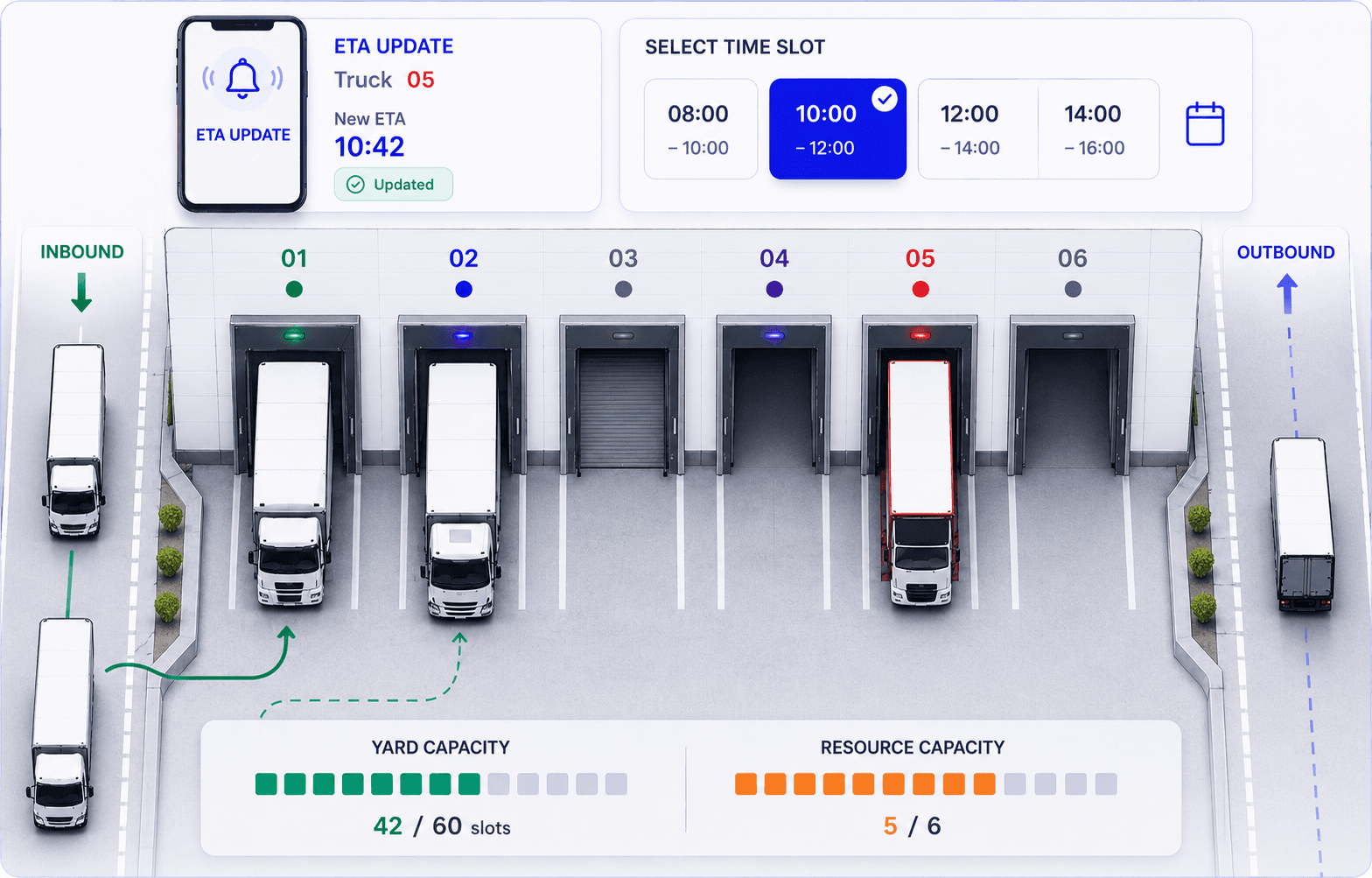
FRAGMENTED OPERATIONS
Operational teams often manage bookings, arrivals, capacity and exceptions across multiple systems and communication channels.
As operational pressure increases, teams lose the shared view needed to keep the day under control.
Teams work from different updates, spreadsheets and local planning decisions.
Dock limits, yard pressure and resource availability are rarely connected to the operational flow itself.
Every delay, arrival change or exception creates extra communication between planners, suppliers and site teams.
ONE SHARED OPERATIONAL FLOW
Define opening windows, configure capacity bands, resource pools and operational rules.
Suppliers and carriers book within operational limits.
Keep arrivals, pickups and operational changes aligned in one flow.
Give teams one live operational view of movements and site activity.
Track movements, timing, exceptions and operational performance.
Use operational data to identify pressure points and improve throughput over time.
OPERATIONAL PLANNING CAPABILITIES
Plan movements against real operational capacity, resources and constraints.
Keep planners, operators, suppliers and carriers aligned from one live operational view.
Allow external partners to schedule and manage movements within operational rules.
Detect queues, congestion and overloaded resources before operations are impacted.
Track on-time performance, dwell times, delays and operational history across sites and partners.
Provide customers, suppliers and carriers with clear visibility into movements, status updates and operational performance.
USE CASES
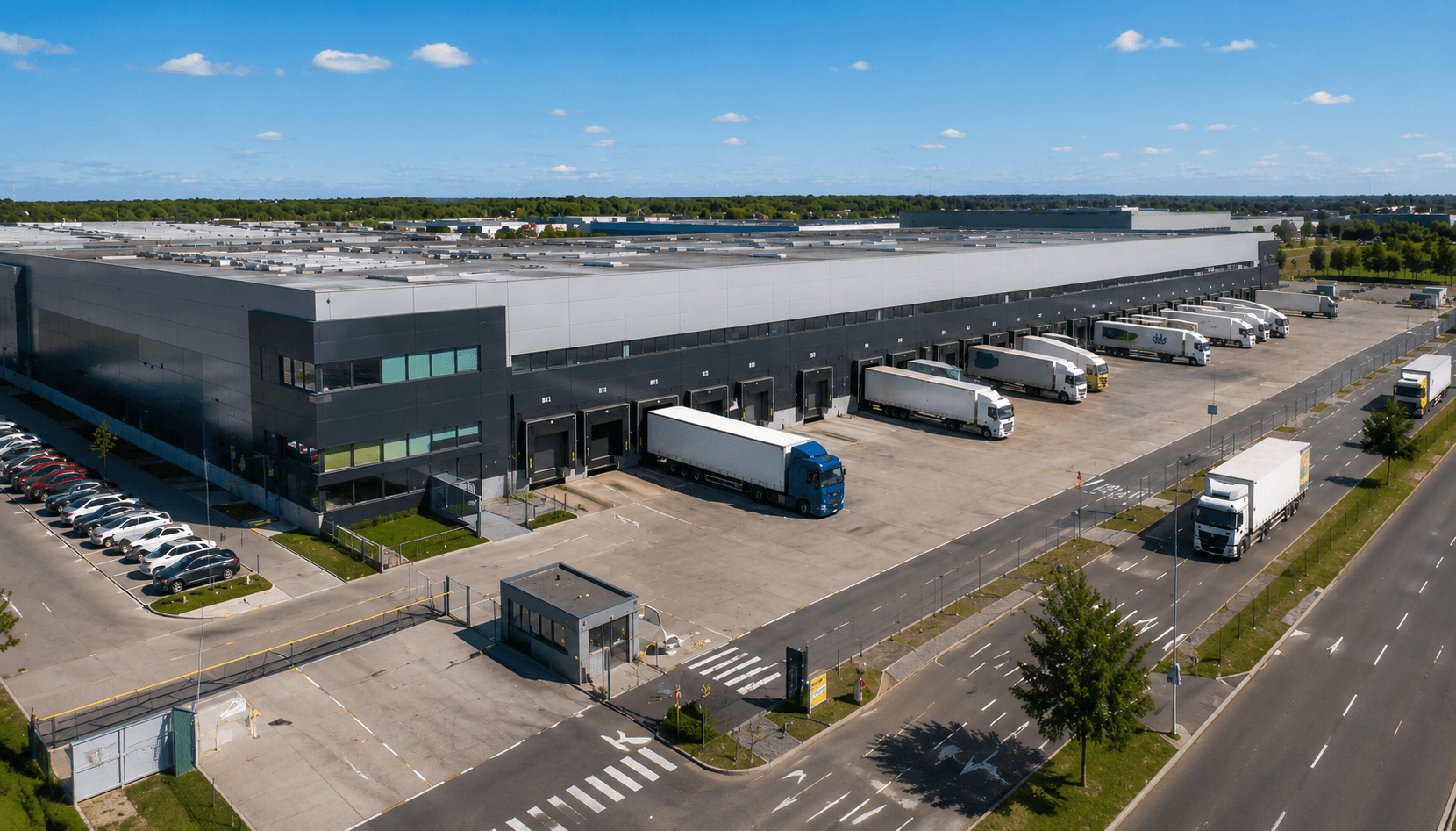
Coordinate docks, yards and daily carrier movement around real capacity.
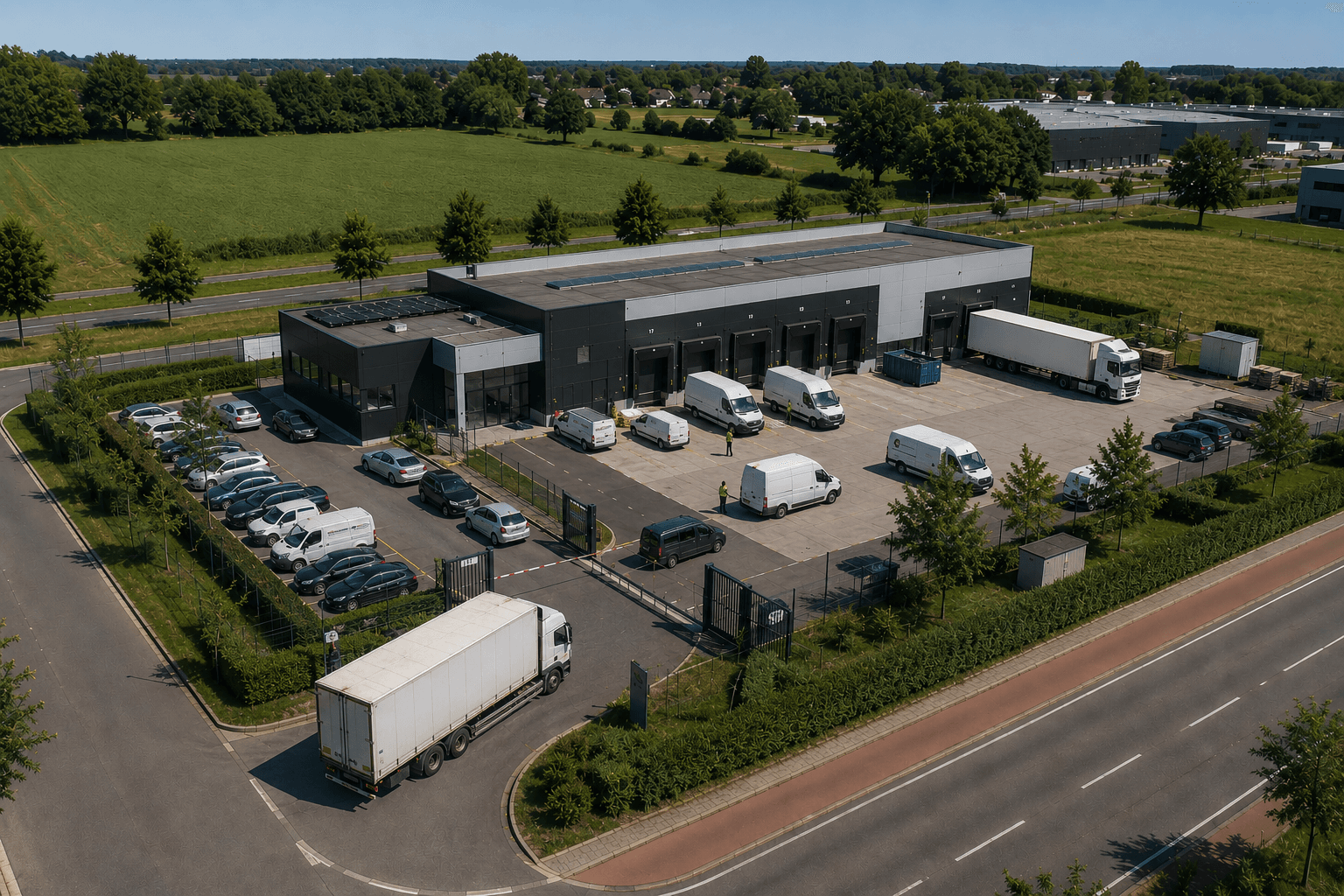
Keep arrivals predictable at compact sites with fewer docks and tighter working space.
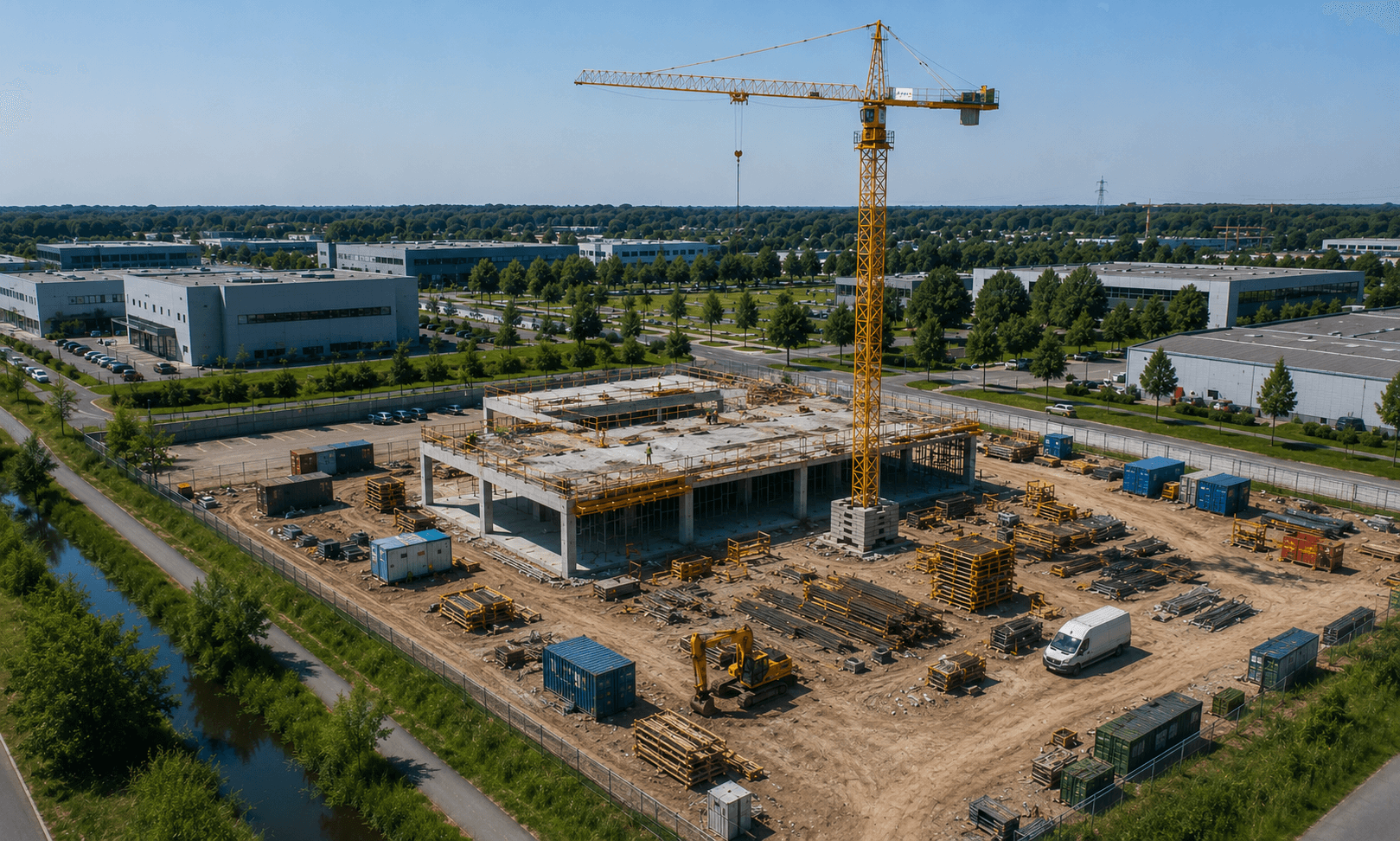
Smooth supplier, material and contractor arrivals when space changes by the day.
Before and after
Flowyard helps operational teams replace fragmented coordination with one operational control layer for the day-to-day site flow.